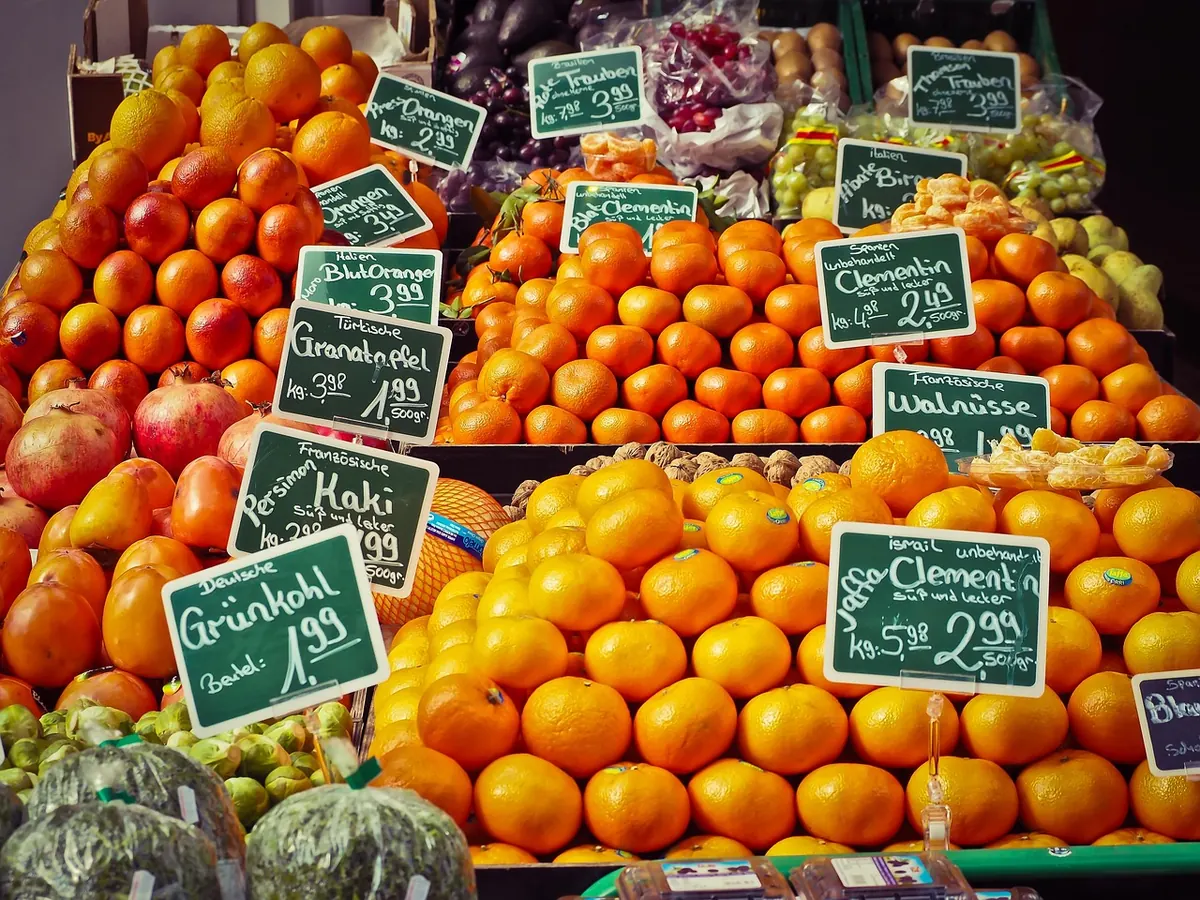
Wick Farmers' Market vs. Local Shops: A Price and Quality Comparison
Come market day in Wick, shoppers divide into two habits: those who head straight for the stalls, and those who stick to the butchers, bakers, greengrocers and corner shops they use all week. Both camps are convinced they are getting the better deal.
Neither is simply wrong. On some groceries the market is cheaper, fresher and more interesting; on others the shops win on price and consistency — and on the plain fact that they are open on a Tuesday evening in February. Here is a straight comparison for the items most households buy, and a way to check it against your own list.
Two different ways of shopping
Market stalls are usually run by the people who grew, baked or made what they are selling, or by someone who works alongside them. Stock is limited, seasonal, and more or less whatever came out of the ground or the kitchen that week. When it is gone, it is gone.
Local shops run to a different rhythm. They buy to a plan, often through wholesalers, and their job is to have the same things on the shelf on a wet Wednesday in November as on a sunny Saturday in June. That is why a greengrocer can offer you a lemon in January and a baker can promise a white loaf at seven in the morning. You pay for that reliability — sometimes in cash, sometimes in flavour.
So the comparison is not market good, shops bad, or the other way round. It is about what each one is actually built to do.
What the market does best
Freshness is the market's strongest card, and it is not a marketing line. A stallholder who lifted carrots that morning has no cold store, no distribution centre and no shelf life to protect. Vegetables arrive with soil still on them and last longer in your kitchen than anything that has spent a week in a crate. The same goes for eggs stamped in the last few days, bread baked before dawn, and meat that has been hung rather than hurried.
Price can be a surprise too. On staples in season — tatties, neeps, carrots, kale, onions, soft fruit in summer — the market is often cheaper than the shop, because there are fewer hands taking a cut between the field and the stall. Buy a box rather than a bag and the gap widens. Gluts work in your favour as well: when courgettes are coming thick and fast in August, a grower will happily do you a deal rather than load them back into the van.
Then there is the part shops cannot easily sell: variety and knowledge. You can ask which potato mashes best, how to cook a cut you have never bought before, or whether the honey came from hives a mile away. You will get an answer from someone who genuinely knows.
- Best buys at the market: seasonal vegetables, summer salad, eggs, fresh bread, preserves, honey, locally reared meat, cheese, herbs and plants.
- Best reasons to go: freshness, flavour, unusual varieties, bulk deals, expert advice, and money that stays in the area.
Where the shops win
Convenience is not a small thing. A shop is open when the market is not: early mornings, late afternoons, Sundays, and every dark evening from November to March. If you finish work at six and still need dinner, the market is a memory and the corner shop is a fact.
Shops also win on consistency and quantity. They will sell you one onion, two rashers or a single lemon. They will have bananas in February and mushrooms after a wet summer, and the same brand of tea you have bought for twenty years. They take cards, offer loyalty points, and will almost certainly still be there next month.
- Best buys in shops: out-of-season produce, imported fruit, milk, tinned and packet goods, household items, and anything you need in a hurry.
- Best reasons to go: opening hours, small quantities, reliability, card payment, and knowing the shelf will not be empty.
Item by item: where the money actually goes
Prices move, so treat these as patterns rather than fixed numbers. Check them against what you really pay.
- Potatoes, carrots, neeps, onions: the market is usually cheaper, often much cheaper in bulk, and noticeably better tasting when freshly lifted. Shops win only if you want one small bag.
- Salad and soft fruit: the market wins in season on both price and quality. Shops win out of season, when they are the only option.
- Eggs: close on price, but market eggs are often fresher and you can ask about the hens. Shops win on late-night availability.
- Bread: market loaves cost more per unit but keep longer and taste better; supermarket bread is cheaper and always there.
- Meat: a good butcher often beats the market on price for a large joint, and both beat the supermarket on flavour. Ask about offers before you commit.
- Preserves, honey, cheese: the market wins on quality and provenance; shops win on brand choice and convenience.
- Milk, teabags, tinned goods: shops win outright. Nobody runs a stall for these.
Beyond price: what does not show on the receipt
There is more to a shopping trip than the total at the bottom. Market produce usually arrives with less plastic and fewer miles behind it, and buying loose means you take only what you need rather than a shrink-wrapped pack of six. Money spent at a stall tends to stay in the area, circulating through local growers, bakers and makers instead of leaving for a depot hundreds of miles away.
Shop the shops for what they are good at, the market for what it is good at — and stop apologising for either.
None of that is an argument for abandoning the shops. A town needs both. The weekly market gives it variety and a bit of theatre; the shops keep it fed on a Tuesday night. They are less rivals than two halves of the same sensible week.
How to run your own comparison
- Write down ten things you buy every week. Bread, milk, eggs, potatoes, meat, fruit and so on. Ten is enough to show the pattern.
- Note the prices in your usual shops over a fortnight, including the unit price per kilo where it is shown.
- Take the same list to the market and price it stall by stall. Ask about bulk rates — a box of potatoes or a tray of eggs is usually cheaper than the loose price.
- Weigh quality separately. A kilo of carrots that lasts two weeks is better value than one that goes soft in four days, even if it cost 20p more.
- Split the list. Most households end up buying staples in bulk at the market and topping up at shops midweek.
- Repeat in another season. The market's stock and prices change with the year; a comparison done in July will not hold in January.
Done honestly, the exercise usually ends the argument. The market wins on freshness, seasonal vegetables, meat, bread, eggs and anything you want to ask questions about. The shops win on opening hours, small quantities, out-of-season fruit, and the ordinary tinned and packet goods nobody thinks twice about. The shoppers who get the best deal are not loyal to one or the other. They use both, and they know exactly why.
Photo: 652234 / Pixabay


You Might Also Like
A practical checklist to help Wick residents get through the Caithness winter, from lagging pipes and gritting paths to emergency kits and checking on neighbours.
Wick's teenagers have nowhere to go and little to do. A properly funded youth centre would be cheaper than the alternative — and the town already has the money, the buildings and the people.